
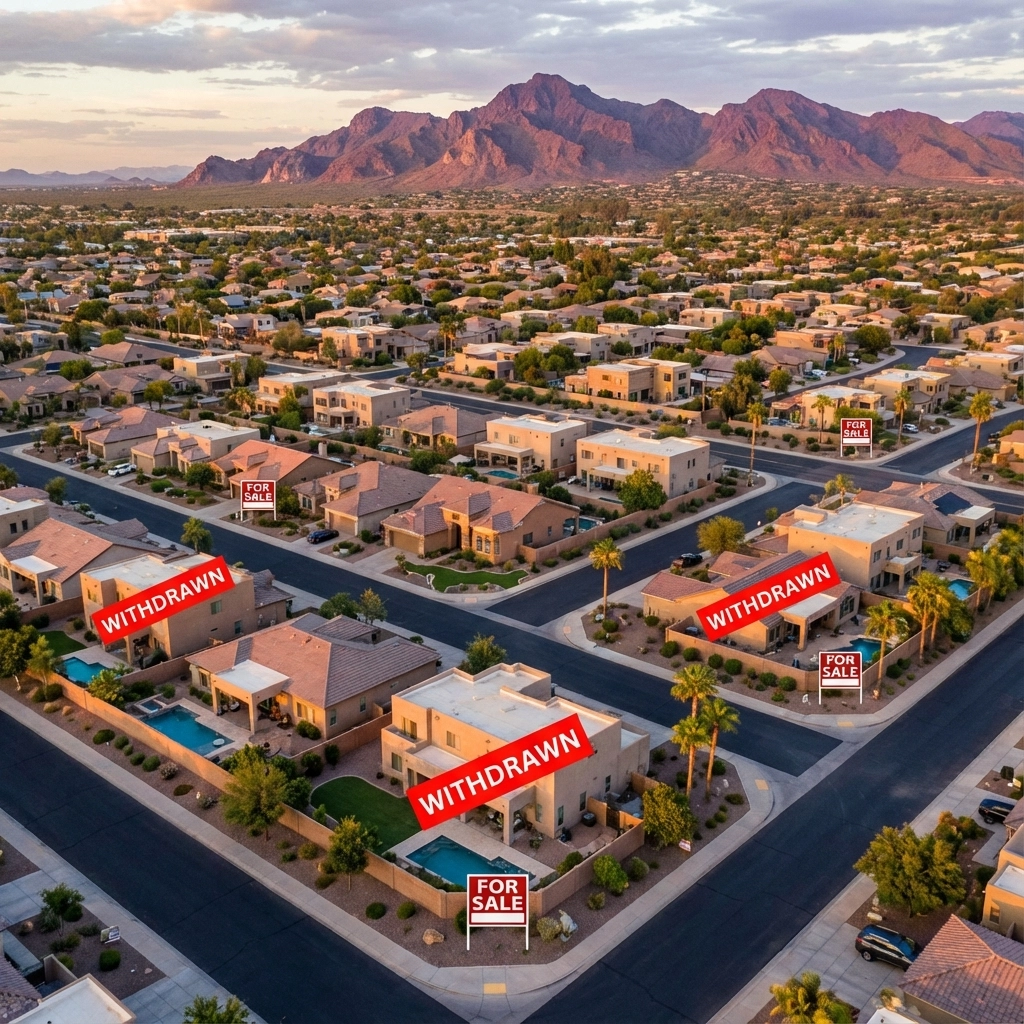
A striking trend is emerging in Phoenix's real estate market: sellers are increasingly choosing to pull their listings entirely rather than reduce their asking prices. This strategic decision reflects a fundamental shift in market psychology and creates unique opportunities for serious buyers who understand how to navigate this new landscape.
The Numbers Behind the Delisting Trend
Recent data reveals that approximately 35-40% of sellers are withdrawing their listings when buyers won't meet their desired price points. Even more telling, about 30% of Phoenix-area homes that were listed for sale have been canceled by homeowners rather than sold at reduced prices.
This isn't happening in isolation. The Phoenix market has experienced a dramatic inventory expansion, with new listings up 20% year-over-year. More than half of all home sales in the first nine months of 2025 included buyer concessions, signaling a clear power shift from sellers to buyers.
Why Sellers Are Choosing to Delist
Financial Flexibility Over Market Capitulation
Many Phoenix sellers have built substantial equity cushions during the previous years of appreciation, giving them the luxury of waiting out unfavorable market conditions. Unlike sellers facing financial distress or relocation deadlines, these homeowners can afford to hold onto their properties until market dynamics improve.
This financial flexibility creates a psychological barrier to price reductions. Sellers who purchased or refinanced when rates were lower often have minimal carrying costs, making it economically viable to wait rather than accept what they perceive as unfair market valuations.
Avoiding Public Price Reductions
There's a strategic element to delisting that goes beyond simple stubbornness. Public price reductions on MLS listings create a perception of desperation and can attract lowball offers. By delisting and potentially relisting later at a different price point, sellers can avoid the stigma of visible price cuts while maintaining negotiating flexibility.
Market Timing Strategy
Some sellers are betting on seasonal improvements or broader economic shifts. Rather than competing in an oversupplied market where nearly half of Phoenix homes are seeing price cuts, they're choosing to wait for more favorable conditions when buyer demand might strengthen relative to inventory levels.
Current Market Dynamics Creating This Trend
Buyer's Market Emergence
The Phoenix housing market has definitively shifted to favor buyers. Homes are spending approximately 86 days on the market, approaching the 100-day threshold that signals strong buyer advantage. The median sale-to-list price ratio has dropped to 98%, with 59.6% of home sales occurring below the original listing price.
This represents a dramatic change from the seller's market that dominated the Phoenix area for several years. The months' supply of inventory has reached 4.4 months, indicating a balanced market trending toward buyer favor.

Oversupply Pressures
The surge in available inventory has fundamentally altered negotiating dynamics. With inventory levels not seen in nearly a decade, buyers have genuine choice and can afford to be selective. This abundance of options has reduced the urgency that once drove quick decisions and competitive bidding.
Modest Price Adjustments
While dramatic, the delisting trend occurs alongside more modest overall price movements. Home prices have declined only 0.43% year-over-year, suggesting the market is rebalancing gradually rather than experiencing a crash. This measured adjustment gives sellers hope that conditions might improve without requiring significant price concessions.
What This Means for Serious Buyers
Enhanced Negotiating Power
The delisting trend paradoxically strengthens the position of serious buyers. Properties that remain on the market represent sellers who are genuinely motivated to transact rather than wait indefinitely. These listings become more negotiable as sellers recognize the alternative is delisting with no sale.
Buyers can approach these remaining properties with confidence, knowing that sellers who choose to stay listed are more likely to accept reasonable offers and negotiate on terms beyond just price.
Quality Inventory Identification
As overpriced properties disappear from the market through delisting, the remaining inventory tends to represent more realistic pricing. This creates a cleaner marketplace where serious buyers can focus on properly positioned homes rather than sorting through unrealistic listings.
Properties that survive the delisting wave often represent better value propositions, as sellers have already calibrated their expectations to current market realities.

Timing Advantages
The gradual nature of Phoenix's market rebalancing means serious buyers don't need to rush into decisions. Unlike crash scenarios where prices drop rapidly, this measured adjustment allows for thorough due diligence, property comparisons, and strategic timing.
Buyers can take advantage of the expanded inventory and extended marketing times to conduct proper inspections, research neighborhoods thoroughly, and negotiate terms that extend beyond price to include repairs, closing costs, and timing flexibility.
Off-Market Opportunities
Delisted properties often return to the market later at adjusted prices or become available through off-market channels. Buyers working with agents who maintain relationships with sellers who have delisted may gain access to properties before they're publicly relisted.
These off-market opportunities can provide access to homes without the competition of public listings, creating potential for negotiated deals that benefit both parties.
Strategic Implications for Different Buyer Segments
First-Time Buyers ($250K-$400K Range)
In this price segment, the delisting trend has reduced competition significantly. Properties that remain listed are more likely to be priced appropriately for current market conditions. First-time buyers can take advantage of expanded choices and negotiate from a position of strength, often securing buyer concessions that weren't available during peak seller's market conditions.
Move-Up Buyers ($400K-$800K Range)
This segment benefits from both sides of the equation. As move-up buyers often need to sell their current home, they can take advantage of delisting strategies if their timeline allows. Simultaneously, they're entering a market with more inventory and better negotiating positions for their next purchase.
Luxury Buyers ($800K+ Range)
Luxury properties have shown more resilience, with homes in the $500K-$1.5M range experiencing a 19% jump in sales year-over-year in recent months. However, the delisting trend still creates opportunities for luxury buyers to find unique properties and negotiate favorable terms, particularly for homes that have been on the market for extended periods.
Looking Forward: What to Expect
The delisting trend reflects a market in transition rather than crisis. As inventory continues to normalize and seasonal patterns reassert themselves, some delisted properties will return to the market with adjusted expectations.
Serious buyers who understand these dynamics can position themselves advantageously by working with experienced agents who track delisted properties and maintain relationships with sellers who may be willing to negotiate off-market deals.
The key for buyers is recognizing that this market shift creates genuine opportunities for those prepared to act strategically rather than emotionally. The combination of expanded inventory, reduced competition, and motivated sellers who choose to remain listed creates conditions favorable for buyers ready to make informed decisions.
For those considering entering the Phoenix market, whether as first-time buyers or those looking to move up, the current environment offers advantages that haven't existed in years. The delisting trend, rather than indicating market dysfunction, represents a natural rebalancing that creates space for serious buyers to find the right home at fair market value.